
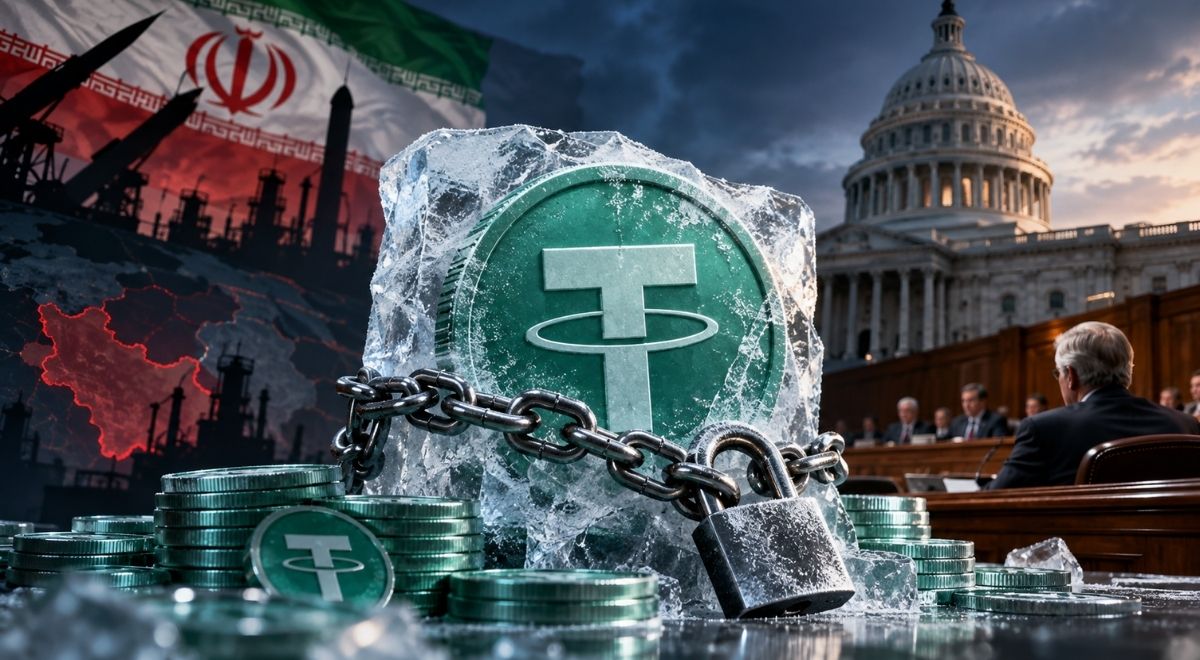
Tether says it has supported the freezing of nearly $550 million in USDT linked to Iran during 2026, highlighting its cooperation with U.S. authorities as the stablecoin issuer faces growing scrutiny from lawmakers over the use of its token in Iranian financial networks.
The company disclosed the figure on September 28, shortly after Democratic investigators on the U.S. Senate Permanent Subcommittee on Investigations released a report examining the role of Tether’s USDT in Iran-linked cryptocurrency activity.
Tether Details Major Iran-Linked Freezes
According to Tether, two major enforcement actions accounted for most of the frozen funds.
In April, the company said it worked with U.S. authorities to freeze more than $344 million in USDT across two addresses after receiving information from the Office of Foreign Assets Control and U.S. law enforcement. The following day, OFAC added the same addresses to the sanctions designation for Iran’s Central Bank.
In July, Tether said it froze more than $130 million in USDT across four additional wallets after the U.S. Treasury expanded the Central Bank of Iran designation to include those TRON addresses.
Together, the two actions represented roughly $475 million in frozen USDT, with Tether putting the total for Iran-linked freezes during 2026 at approximately $550 million.
Tether also cited its broader cooperation with international authorities. The company said its work with law enforcement has supported more than 2,900 investigations globally, including more than 1,600 involving U.S. agencies. It said it works with hundreds of law-enforcement agencies across dozens of countries.
Senate Report Examines USDT’s Role in Iran
The Tether announcement came as the Senate investigation raised fresh questions about the use of USDT by Iran-linked entities.
The report, released by Senator Richard Blumenthal, the ranking Democrat on the Senate Permanent Subcommittee on Investigations, examined blockchain transaction data from 846 cryptocurrency wallets that had been sanctioned or targeted for seizure because of their connections to Iran or Iranian-linked groups.
Investigators found that 84% of those wallets had transacted exclusively or almost exclusively in USDT, according to the report. The investigators argued that the findings demonstrate the importance of Tether’s stablecoin within Iran’s shadow-banking networks.
The report also alleged that Iranian-linked cryptocurrency networks have been used to move funds across borders, support the country’s currency and facilitate transactions connected to activities including procurement of military equipment.
Blumenthal referred the findings to Treasury Secretary Scott Bessent and Attorney General Todd Blanche and called for the Treasury and Justice departments to investigate whether Tether could have violated sanctions or banking laws.
Tether Rejects the Suggestion That USDT Is a Safe Haven
Tether has disputed the characterization that USDT provides a safe haven for sanctioned entities.
CEO Paolo Ardoino said the company has consistently cooperated with law enforcement and emphasized that transactions on public blockchains provide authorities with visibility into the movement of funds.
Tether said it can freeze USDT when credible information is provided by authorities and pointed to the nearly $550 million in Iran-linked assets frozen during 2026 as evidence of that cooperation.
The Senate report, however, argued that Tether has not always acted proactively on wallets that investigators say showed indicators of illicit activity. It specifically questioned the company’s actions before 2024 and its response to some Iran-linked wallets.
The competing claims put Tether’s compliance practices under renewed scrutiny as U.S. authorities expand their focus on cryptocurrency’s role in sanctions evasion and illicit finance.