
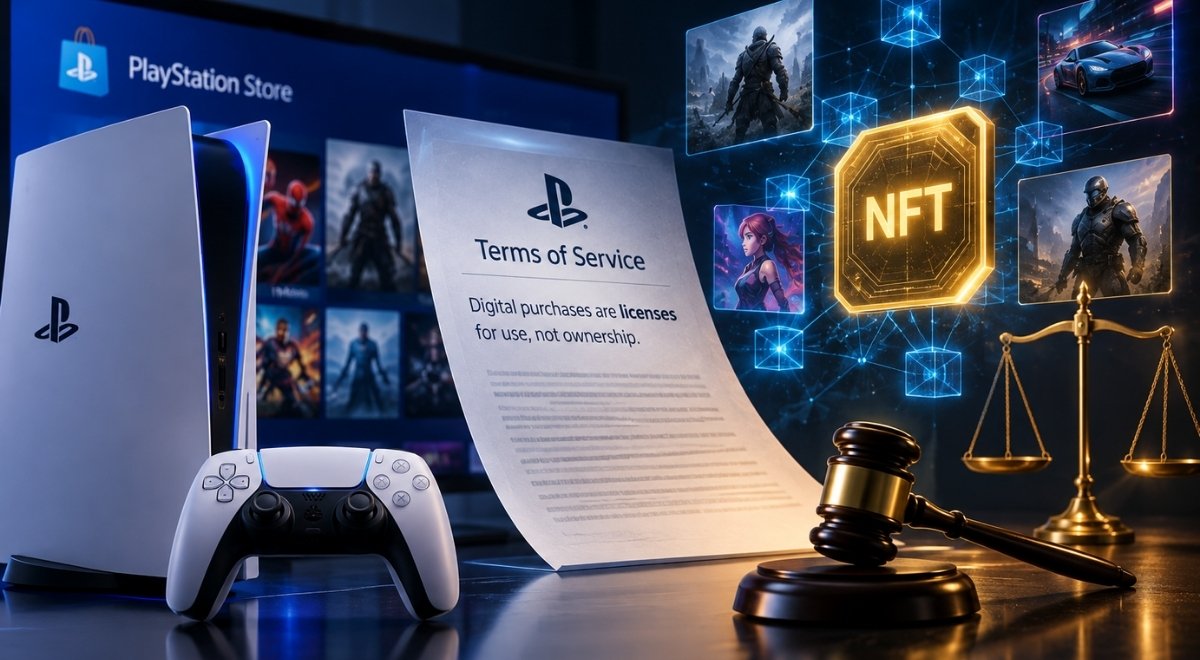
Sony has updated the terms governing its PlayStation Store, explicitly stating that digital content purchased by users is licensed rather than owned outright. The revised wording has renewed a long-running debate over digital ownership and the potential role of blockchain technology in giving consumers greater control over virtual assets.
Under the updated terms, purchasing a game, add-on or other digital content through the PlayStation Store grants users a license to access and use that content. Sony retains control over the underlying digital rights, meaning access to purchased content can potentially be restricted or revoked under certain circumstances. While similar licensing arrangements have been common across the gaming industry for years, the clearer wording has drawn renewed attention to what consumers actually receive when they purchase digital products.
The change has also prompted discussion among cryptocurrency and NFT advocates, who argue that blockchain technology could provide a different model for digital ownership. NFTs can create publicly verifiable records associated with digital assets, potentially allowing certain virtual items to be transferred between users without relying entirely on a single platform’s database.
Supporters of blockchain-based gaming have suggested that game items, cosmetic assets and other digital goods could be represented as blockchain tokens. In theory, this could provide players with a persistent record of an asset that exists independently of a particular storefront. Advocates contend that such a system could offer greater transparency and transferability than conventional platform-controlled licenses.
However, blockchain records do not automatically guarantee continued access or functionality. Critics note that many digital assets remain dependent on game servers, developers, software and intellectual-property rights. If a studio shuts down a game or stops supporting the infrastructure connected to an NFT, the token could continue to exist on a blockchain while losing much of its practical usefulness.
The broader NFT gaming market has also faced challenges, including declining values for some projects and difficulties attracting sustained mainstream player adoption. These issues have raised questions about whether blockchain-based ownership can provide meaningful long-term benefits beyond the traditional licensing systems already used by major gaming platforms.
Privacy is another potential obstacle to wider adoption. Many public blockchains permanently record transactions, allowing observers to see when assets were acquired or transferred and, depending on the network and information available, potentially link activity to specific users or accounts. For gamers, publicly exposing details about digital purchases and collections could create privacy concerns that do not necessarily exist when transactions remain within a platform’s private database.
For now, Sony’s updated language does not establish a connection between PlayStation and NFTs. Instead, it highlights a broader issue facing the digital entertainment industry: the difference between paying for access to digital content and legally owning an asset. As games, virtual goods and digital storefronts continue to evolve, the question of what consumers truly own is likely to remain part of the wider technology debate.