
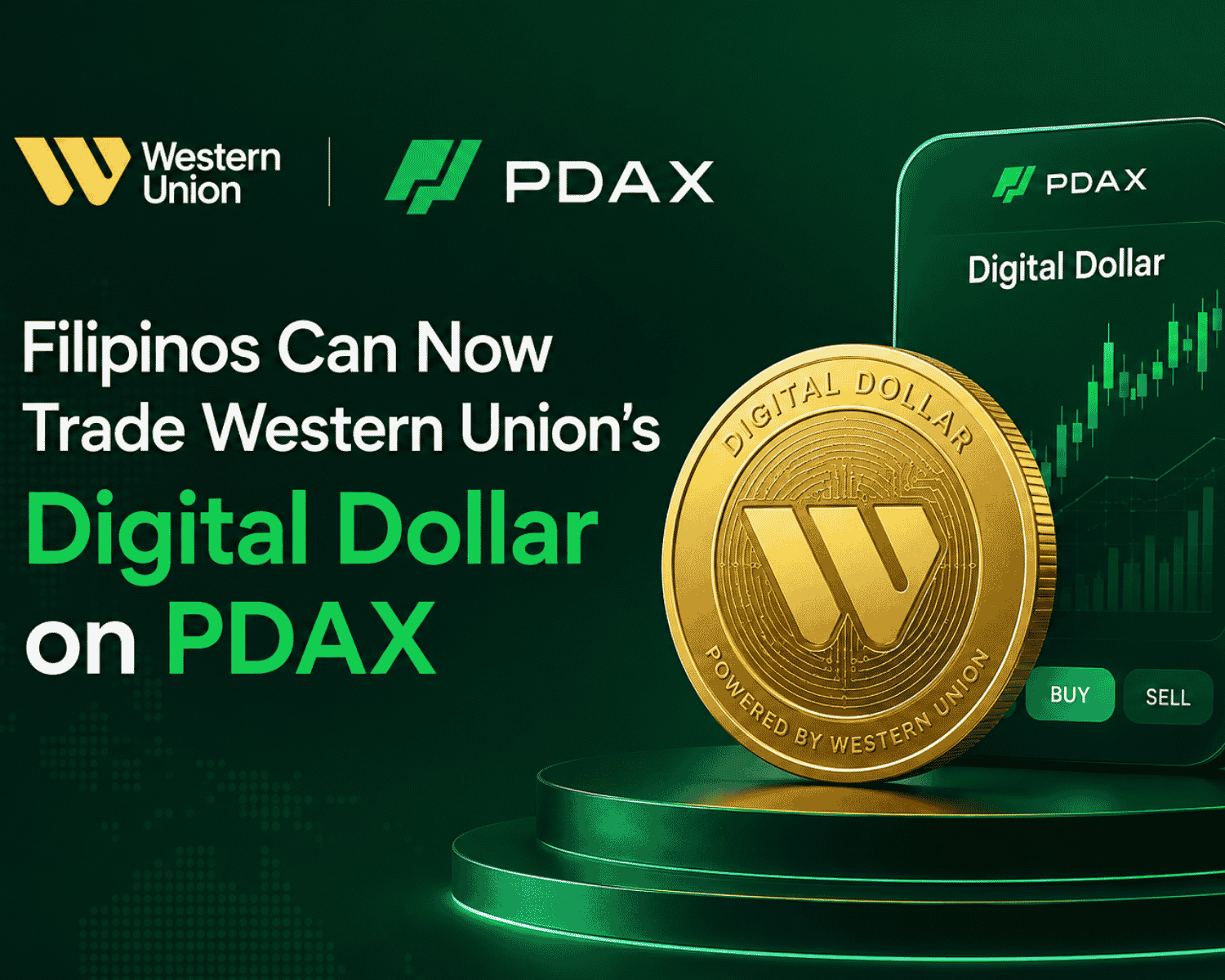
Filipinos who receive money from overseas, work with international clients, or want exposure to the U.S. dollar can now hold and trade Western Union’s dollar-backed stablecoin through local digital asset exchange PDAX.
The platform has added USDPT, or U.S. Digital Payment Token, a digital asset designed to maintain a 1:1 value with the U.S. dollar. The integration gives users a way to access digital dollars without relying solely on traditional foreign exchange services or banking schedules.
For overseas Filipino workers (OFWs), freelancers, and families receiving international payments, transferring U.S. dollars can involve banking cut-off times, intermediary fees, and delays during weekends. USDPT is built on the Solana blockchain, enabling transactions and settlement around the clock.
Through its listing on PDAX, users can convert USDPT into Philippine pesos or trade it for other supported crypto assets. PDAX operates under regulation from the Bangko Sentral ng Pilipinas (BSP).
How USDPT Works
Western Union developed USDPT as part of its digital payment infrastructure, while Anchorage Digital Bank, N.A., a federally chartered U.S. trust bank, serves as the token’s issuer.
According to the issuers, USDPT is backed by reserves that include U.S. dollar deposits, U.S. Treasury securities, and cash equivalents. The reserves are intended to support a 1:1 redemption value against the U.S. dollar.
USDPT runs on Solana, a blockchain known for relatively low transaction costs and fast processing. These features can provide an alternative to conventional wire transfers and certain slower blockchain networks.
PDAX customers can buy, sell, and swap USDPT through both the platform’s mobile application and website.
Nichel Gaba, CEO and Founder of PDAX, said access to faster and more flexible financial tools is particularly relevant for OFWs, freelancers, and families receiving money from abroad. He described the USDPT listing as another way for users to access digital dollars through a locally regulated platform.
Vince Tallent, Western Union’s Senior Vice President and Head of Asia Pacific, said the partnership is intended to connect digital assets with traditional financial networks across the region.
Stablecoins Gain Ground in the Philippine Remittance Market
The launch comes as stablecoin use continues to develop in the Philippines, where consumers and businesses are exploring digital assets for cross-border payments and protection against fluctuations in local currency values.
The Philippines is also one of the world’s major remittance markets, receiving tens of billions of dollars from overseas workers each year. The growing connection between digital assets and traditional payment networks could give Filipinos additional options for receiving, holding, converting, and transferring foreign currency.
With USDPT now available through PDAX, users have another digital-dollar option that combines a U.S. dollar-linked asset with access to a locally regulated cryptocurrency platform.