
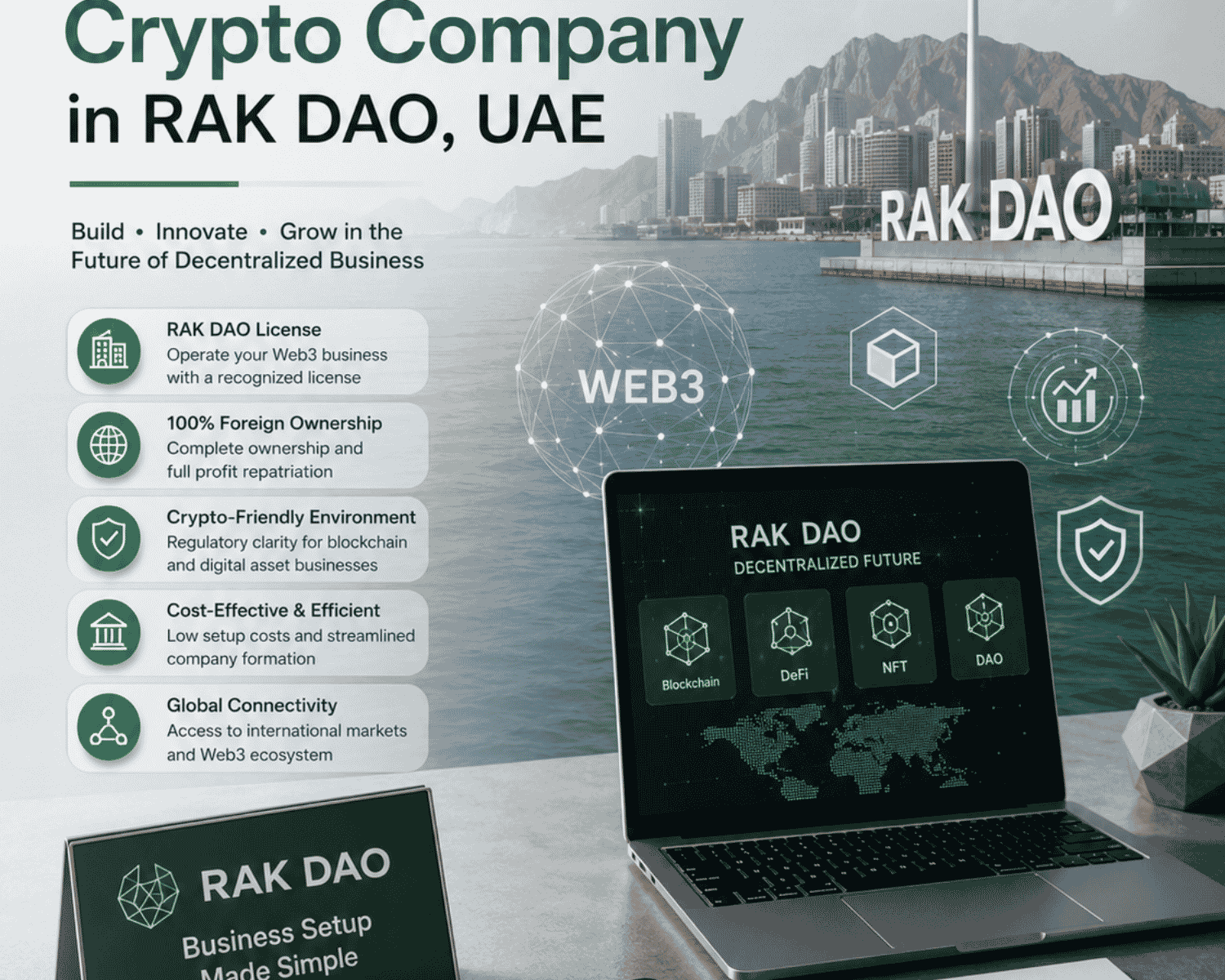
Ras Al Khaimah Digital Assets Oasis, widely known as RAK DAO, has emerged as a prominent UAE free-zone destination for Web3 entrepreneurs, blockchain developers and digital-asset businesses. For founders exploring a RAK DAO setup in the UAE, the jurisdiction offers a sector-focused environment for businesses operating in areas such as blockchain development, non-custodial applications, NFT platforms, Web3 infrastructure and digital-asset research.
However, one of the most important considerations is understanding the difference between activities permitted under a RAK DAO free-zone licence and regulated virtual asset services. Businesses involved in activities such as custody, brokerage, exchange operations or certain forms of investment management may require additional regulatory approval from authorities such as Dubai’s Virtual Assets Regulatory Authority (VARA) or the Financial Services Regulatory Authority (FSRA) of Abu Dhabi Global Market (ADGM).
This guide explains the key considerations for establishing a Web3 or crypto company in RAK DAO, including eligible activities, incorporation steps, documentation, compliance requirements, costs, taxation and situations where a separate regulatory licence may be necessary.
RAK DAO at a Glance
- Business focus: Non-regulated digital-asset, blockchain and Web3 activities.
- Foreign ownership: 100% foreign ownership is available.
- Local sponsor: Generally not required for free-zone incorporation.
- Company structures: Options can include free-zone entities and branch structures, depending on eligibility.
- Visas: Investor and employee visa options are available, subject to applicable quotas.
- Setup period: Incorporation can take several weeks depending on the business activity, documentation and approval process.
- Costs: Formation and first-year licensing expenses vary according to the selected structure, activities and additional requirements.
- Regulatory boundary: Businesses conducting regulated virtual asset activities may need separate authorisation from the relevant UAE regulator.
Why Are Web3 Founders Considering RAK DAO?
RAK DAO is designed specifically around the digital-assets and Web3 sector, making it different from a conventional free zone that simply allows technology companies to operate.
For suitable businesses, several factors can make the jurisdiction attractive.
1. Web3-Focused Business Environment
RAK DAO was established with digital assets, blockchain and Web3 businesses in mind. This creates an ecosystem focused on entrepreneurs developing blockchain applications, infrastructure, digital products and related services.
2. Full Foreign Ownership
International founders can establish businesses without the need for a UAE national shareholder under the applicable free-zone structure.
3. Free-Zone Business Advantages
Eligible companies can benefit from the broader advantages associated with UAE free-zone structures, including business ownership flexibility and the ability to repatriate funds, subject to applicable UAE laws and regulations.
4. Industry-Specific Ecosystem
A dedicated digital-assets environment can make it easier for founders to connect with blockchain developers, technology providers, investors and professional service firms familiar with the sector.
5. Founder and Employee Visas
Depending on the company structure, office arrangement and available quota, founders and employees may be eligible to apply for UAE residency visas through the company.
What Activities Can a RAK DAO Company Conduct?
The permitted scope depends on the specific licence and activity approved by the authority. Generally, RAK DAO is positioned toward non-regulated Web3 and digital-asset activities.
Potential business areas can include:
Blockchain Development
Companies can develop blockchain protocols, smart contracts, decentralised applications and related software infrastructure.
Web3 Infrastructure
Businesses may provide technology services such as blockchain infrastructure, node-related services, indexing, oracle technology and decentralised storage solutions, subject to the approved activity.
Non-Custodial NFT Platforms
A marketplace in which customers maintain control of their own wallets and assets can fall within the non-custodial technology model, provided the actual business activities remain outside regulated services.
Token Engineering and Consulting
Companies can provide technical consulting relating to token design, tokenomics, governance systems and blockchain architecture where the activity does not itself constitute a regulated service.
DAO Technology
Businesses can develop governance software and other technological tools for decentralised autonomous organisations without taking control of client assets.
Research and Education
Blockchain research, education, publishing and other knowledge-based activities may also be suitable for a Web3-focused free-zone business, subject to licensing requirements.
Activities That May Require Regulatory Approval
The most important issue for founders is determining whether their proposed business crosses into regulated virtual asset activity.
Potential regulatory red flags include:
- Holding or safeguarding virtual assets for customers
- Controlling customers’ private keys
- Operating a virtual asset exchange
- Matching buyers and sellers
- Providing brokerage or dealing services
- Managing virtual asset portfolios
- Providing certain investment-related services
- Operating hosted custodial wallets
- Issuing certain redeemable or fiat-linked tokens
- Conducting other activities classified as regulated virtual asset services
A company should not assume that describing a service as “Web3” or “blockchain technology” automatically makes it unregulated. The substance of the business model matters.
If a planned service involves customer assets or financial intermediation, founders should obtain specialist regulatory advice before launching the service.
Step-by-Step RAK DAO Company Formation Process
1. Define Your Business Model
Start by documenting exactly what the company will do.
Identify:
- Products and services
- Target customers
- Revenue streams
- Token-related activities
- Wallet functionality
- Whether the company will ever control customer assets
- Whether transactions will be arranged or executed on behalf of customers
This assessment helps determine whether RAK DAO is appropriate or whether another regulatory framework is required.
2. Select the Legal Structure
Choose the company structure that best fits the ownership and operational model.
A free-zone limited liability structure may be appropriate for companies with one or multiple shareholders, while other structures may be available for individual founders or existing overseas companies establishing a UAE presence.
3. Prepare the Required Documents
Typical documentation can include:
- Passport copies of shareholders and directors
- Corporate documents for corporate shareholders
- Company incorporation documents
- Board resolutions where applicable
- Business plan or company description
- Description of proposed activities
- Additional technical information for blockchain or token projects
- Proof of funds or other financial documentation where requested
- Compliance documentation where applicable
More complex ownership structures may require additional documentation.
4. Reserve the Company Name
The proposed company name is submitted for approval.
Founders should ensure that the name complies with applicable UAE and free-zone naming requirements before proceeding with incorporation.
5. Obtain Initial Approval
The authority reviews the proposed activities and supporting information.
This is particularly important for Web3 companies because the wording used to describe the business should accurately reflect what the company intends to do.
For example, a software-development company should clearly explain its technology services rather than using broad terms such as “crypto exchange” if it does not actually operate an exchange.
6. Complete Incorporation and Licensing
After the required approvals and documentation are completed, the applicant pays the applicable incorporation and licensing fees.
The company can then receive its trade licence subject to approval.
7. Open a Corporate Bank Account
Following incorporation, the company can approach UAE banks or suitable financial institutions for corporate banking.
Web3 businesses should expect enhanced due diligence. Banks may request information about:
- Business activities
- Source of funds
- Expected transaction volumes
- Customers
- Shareholders and beneficial owners
- Token-related activities
- Blockchain addresses or transaction flows
- Compliance procedures
Obtaining a trade licence does not guarantee that a particular bank will approve the company’s account.
8. Establish Compliance Controls
A Web3 business should establish appropriate compliance procedures before beginning operations.
These may include:
- Customer due diligence
- Know-your-customer procedures
- Beneficial-owner identification
- Sanctions screening
- Transaction monitoring
- Recordkeeping
- Suspicious transaction reporting procedures
- Risk assessments
- Internal compliance controls
9. Apply for Visas
Once the company is established, eligible shareholders and employees can apply for UAE residency visas through the relevant free-zone process.
Visa availability depends on the company’s structure, licence and applicable quota.
10. Monitor Regulatory Changes
The company should continuously review its activities.
A business that starts as a software provider may later introduce features that involve custody, brokerage, exchange or investment services. Such changes can alter the company’s regulatory obligations.
RAK DAO vs VARA vs ADGM
| Factor | RAK DAO | VARA – Dubai | ADGM – Abu Dhabi |
| Primary role | Web3 and non-regulated digital-asset businesses | Regulation of virtual asset activities in Dubai | Regulation of financial services in ADGM |
| Suitable for | Blockchain development, Web3 infrastructure and non-custodial technology | Regulated virtual asset service providers | Regulated virtual asset and financial-services businesses |
| Custody | Generally outside the non-regulated scope | Regulatory approval required | Regulatory approval required |
| Exchange services | Not the typical non-regulated model | Regulated | Regulated |
| Brokerage | Generally outside the non-regulated scope | Regulated | Regulated |
| Development/R&D | Suitable subject to licensing | Possible within applicable framework | Possible within applicable framework |
| Regulatory framework | Free-zone licensing | VARA | ADGM FSRA |
The appropriate jurisdiction depends on the company’s actual business model rather than simply the fact that it uses blockchain or cryptocurrency.
What Does a RAK DAO Licence Require?
While exact requirements depend on the application and business activity, founders should be prepared to demonstrate:
Suitable Business Activity
The company’s activities should fit within the scope approved by the free-zone authority.
Registered Business Presence
The company must maintain the applicable registered address or office arrangement required under its licence.
Shareholder and Director Information
The authority will require identification and corporate information for shareholders, directors and beneficial owners.
Business Description
The proposed business should be explained clearly and accurately, particularly where blockchain, tokens or digital assets are involved.
Compliance Framework
Companies should maintain appropriate AML/CFT and customer-screening procedures relevant to their activities and risk profile.
AML and KYC Considerations
Operating from a free zone does not mean a Web3 company can ignore UAE anti-money-laundering requirements.
Businesses should establish a risk-based compliance framework appropriate to their activities.
Important controls can include:
Customer Due Diligence
Identify and verify customers and relevant counterparties before entering into relationships where required.
Beneficial Ownership
Maintain accurate information about the individuals who ultimately own or control the company and relevant counterparties.
Sanctions Screening
Screen relevant customers, counterparties and transactions against applicable sanctions lists.
Transaction Monitoring
Where appropriate, monitor blockchain and traditional financial transactions for unusual or suspicious activity.
Suspicious Activity Procedures
Establish internal procedures for identifying and escalating suspicious activity and making reports where legally required.
Recordkeeping
Maintain relevant customer, transaction and compliance records for the period required under applicable UAE legislation.
Travel Rule Considerations
Businesses involved in qualifying virtual asset transfers should assess whether applicable travel-rule requirements apply to their activities.
The Importance of the Custody Boundary
Custody is one of the most important regulatory issues for Web3 founders.
A non-custodial application generally allows users to maintain control over their own private keys and assets.
By contrast, a platform can move toward a regulated activity when it begins controlling, safeguarding, administering or otherwise holding virtual assets for customers.
For this reason, founders should review product features carefully before adding:
- Escrow systems
- Hosted wallets
- Platform-controlled private keys
- Customer asset accounts
- Treasury management
- Asset transfers conducted on behalf of customers
A seemingly small product change can have significant regulatory consequences.
RAK DAO Setup Costs
The total cost of establishing a company depends on its legal structure, licence activities, office arrangement, visas and professional requirements.
Costs may include:
- Company incorporation fees
- Trade licence fees
- Registered-office or workspace costs
- Visa fees
- Establishment-related government charges
- Accounting services
- Legal advice
- AML/CFT compliance services
- Banking-related costs
- Technology and compliance tools
Indicative market estimates for formation and first-year licensing can vary substantially, so founders should obtain a current quotation directly from RAK DAO before budgeting.
Professional and compliance costs should also be considered separately because businesses with more complex token models or international structures can require considerably more advisory work.
UAE Corporate Tax and VAT
The UAE’s federal corporate tax regime applies to businesses subject to the relevant tax rules.
The headline corporate tax rate is generally 9% on taxable income above AED 375,000, subject to applicable legislation and exemptions.
Free-zone companies may qualify for a 0% corporate tax rate on qualifying income if they satisfy the conditions applicable to qualifying free-zone persons.
The tax treatment therefore cannot be determined solely from the fact that a company operates in RAK DAO.
VAT is generally charged at 5% on taxable supplies, although the treatment of particular digital-asset and token-related transactions can depend on the nature of the transaction.
Web3 founders should obtain professional UAE tax advice before launching token sales or cross-border digital-asset services.
When Should a RAK DAO Company Consider VARA or ADGM?
A founder should reconsider the licensing structure if the business begins providing services such as:
- Customer asset custody
- Exchange operations
- Brokerage
- Certain transfer or settlement services
- Portfolio or investment management
- Hosted wallets
- Other regulated virtual asset activities
Example: NFT Marketplace
A company launches a marketplace where users connect their own wallets and transact directly without the platform taking control of their NFTs or private keys.
The company may be able to operate within a non-custodial technology model, subject to the specific licence and applicable regulations.
If the platform later introduces an escrow wallet controlled by the company, the regulatory analysis can change significantly.
Example: DAO Treasury Management
A company initially provides DAO governance software.
Later, a customer asks the company to take control of a multimillion-dollar treasury and make investment or trading decisions.
That new service is materially different from providing software and could introduce regulated financial or virtual-asset activities.
The company should obtain regulatory advice before providing the service.
Common Mistakes Web3 Founders Should Avoid
Using Vague Licence Descriptions
Broad phrases such as “crypto trading” or “digital asset management” can create unnecessary regulatory questions if they do not accurately describe the company’s activities.
Assuming a Free-Zone Licence Covers Everything
A RAK DAO trade licence does not automatically authorise every cryptocurrency-related service.
Ignoring Product Changes
Adding an escrow wallet, custody feature or trading function can change the regulatory status of a business.
Treating Banking as Automatic
Company incorporation and bank-account approval are separate processes. Banks perform their own due diligence.
Delaying Compliance
Building AML/KYC controls only after launching can create operational and regulatory problems. Compliance should be considered during product development.
Focusing Only on Incorporation Costs
The total cost of operating a Web3 company also includes visas, office arrangements, accounting, tax, legal advice, compliance systems and annual renewals.
Key Takeaways
RAK DAO can be an attractive option for founders building non-custodial Web3, blockchain development and digital-asset technology businesses in the UAE.
The main advantage is its sector-focused environment and relatively straightforward free-zone incorporation model. However, the critical issue is understanding where technology development ends and regulated virtual asset services begin.
Before establishing a company, founders should:
- Define every proposed business activity.
- Determine whether the company will control customer assets.
- Review wallet, exchange and transaction functionality.
- Select the appropriate RAK DAO licence category.
- Prepare ownership and business documentation.
- Establish appropriate AML/KYC controls.
- Obtain independent tax and regulatory advice where necessary.
- Monitor the business model for activities that could require VARA or ADGM authorisation.
For a purely non-custodial Web3 technology company, RAK DAO may provide a practical UAE base. For businesses handling customer assets, operating exchanges or providing regulated investment-related services, a separate regulatory framework may be required.
Because UAE digital-asset regulations continue to develop, founders should verify current licensing requirements, fees and tax treatment with the relevant authorities and qualified professional advisers before incorporating or launching regulated services.