
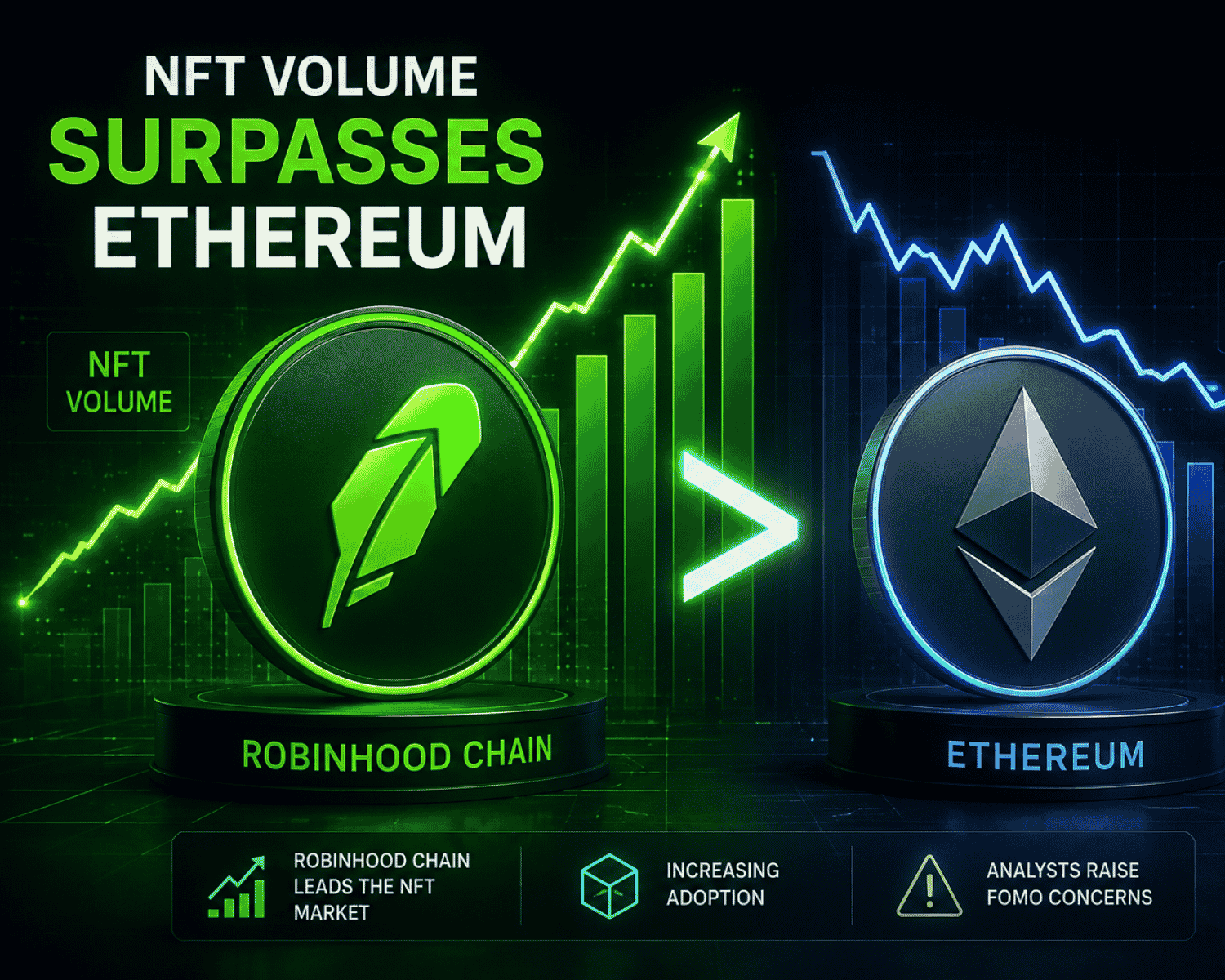
Robinhood Chain recorded a sharp increase in NFT trading activity on Aug. 12, with its daily trading volume surpassing that of Ethereum, according to data from Dune Analytics cited by The Data Nerd.
The newly launched blockchain processed approximately $3.13 million in NFT trading volume on the day, compared with around $1.35 million on Ethereum. That put Robinhood Chain’s daily NFT volume at roughly 2.3 times Ethereum’s figure.
The surge represents an early milestone for Robinhood Chain, but analysts caution that the sudden increase may be fueled largely by short-term speculation and fear of missing out (FOMO).
Robinhood Chain Sees Sudden NFT Activity
Robinhood Chain officially launched its mainnet on July 1, making its rapid rise in NFT activity particularly notable. The network has attracted attention by offering lower transaction costs and faster processing, potentially giving traders an alternative to established blockchain networks.
According to The Data Nerd, however, the unusually high volume could be partly explained by traders rushing to participate in the emerging ecosystem. Such rapid increases in activity are common during the early stages of new blockchain launches, when investors and traders attempt to capitalize on potential opportunities before the market matures.
The analysts warned that one-day trading spikes do not necessarily translate into sustained demand.
Ethereum Still Holds a Strong Position
Ethereum has historically been the dominant network for NFT activity, benefiting from its large developer ecosystem, established marketplaces and extensive user base.
However, high transaction fees and periods of network congestion have encouraged some users to explore alternative blockchains. Robinhood Chain’s lower-cost infrastructure could make it appealing to retail traders who want to participate in NFT markets without facing Ethereum’s potentially higher transaction expenses.
Its connection to the Robinhood trading platform could also provide the network with access to a large audience already familiar with digital assets and retail investing.
What the Volume Surge Means for NFTs
Robinhood Chain’s performance highlights the increasingly competitive nature of the blockchain industry. As newer networks attempt to attract users and developers, transaction costs, speed and accessibility are becoming important factors in determining where NFT activity takes place.
Still, a single day of high trading volume should be viewed cautiously. NFT markets are highly volatile, and activity can rise rapidly around new launches, popular collections or speculative trends before declining just as quickly.
For Robinhood Chain, the more important question will be whether it can maintain meaningful NFT activity after the initial excitement fades.
FOMO Could Be Driving the Rally
The Data Nerd’s warning about FOMO is particularly relevant given Robinhood Chain’s recent mainnet launch. Traders may be entering the network simply because they expect its popularity to increase, creating a temporary cycle of rising activity.
If that momentum is primarily speculative, trading volumes could fall considerably once the initial excitement disappears.
On the other hand, continued activity over the coming weeks and months could indicate that the network is attracting genuine users rather than short-term speculators.
A Potential Challenge to Established Networks
Robinhood Chain’s early NFT numbers demonstrate how quickly a new blockchain can attract market attention. Its ability to combine lower transaction costs with the Robinhood brand could give it an advantage in attracting retail users.
However, challenging Ethereum will require more than a single volume milestone. Long-term success will likely depend on sustained user growth, NFT collections, developers, marketplace support and consistent transaction activity.
Ethereum’s established ecosystem remains a significant competitive advantage, even as newer networks attempt to capture specific segments of the market.
Why This Matters for Traders
For NFT traders and crypto investors, Robinhood Chain’s performance is another example of how quickly market dynamics can change.
New blockchain networks can gain substantial attention in a short period, potentially creating opportunities for early participants. At the same time, rapid growth can bring increased speculation and volatility.
Investors should therefore distinguish between temporary trading activity and evidence of long-term adoption. Monitoring daily volume over an extended period, along with active users and ecosystem development, will provide a clearer picture of Robinhood Chain’s position in the NFT market.
Conclusion
Robinhood Chain’s NFT trading volume overtaking Ethereum on Aug. 12 marks an important early achievement for the recently launched network. With approximately $3.13 million in daily NFT volume compared with Ethereum’s $1.35 million, the figures show that the new blockchain has already attracted significant attention.
However, analysts’ concerns about FOMO highlight the uncertainty surrounding the surge. Whether Robinhood Chain can maintain its momentum after the initial excitement fades will be far more important than a single day of record activity.
If trading volumes remain strong and the network continues to attract users, developers and NFT projects, Robinhood Chain could emerge as a more significant competitor in the increasingly fragmented blockchain market.
FAQs
What is Robinhood Chain?
Robinhood Chain is a blockchain network launched by Robinhood. Its mainnet went live on July 1 and is designed to support lower-cost and faster blockchain transactions.
Why did Robinhood Chain’s NFT volume surge?
The sharp increase may have been driven partly by traders rushing to participate in the newly launched network. Analysts cited by The Data Nerd warned that FOMO could be contributing to the unusually high activity.
Did Robinhood Chain permanently surpass Ethereum in NFT volume?
Not necessarily. The comparison is based on daily trading volume recorded on Aug. 12. A single day of elevated activity does not establish a long-term shift in market dominance.
Is Ethereum still important for NFTs?
Yes. Ethereum remains one of the most established blockchain ecosystems for NFTs, with a large user base, developer community and marketplace infrastructure. Newer networks are increasingly competing with it through lower fees and faster transactions.
What should investors watch next?
Investors should monitor whether Robinhood Chain can maintain NFT trading volume, attract active users and developers, and build a sustainable ecosystem after the initial launch-driven excitement subsides.