
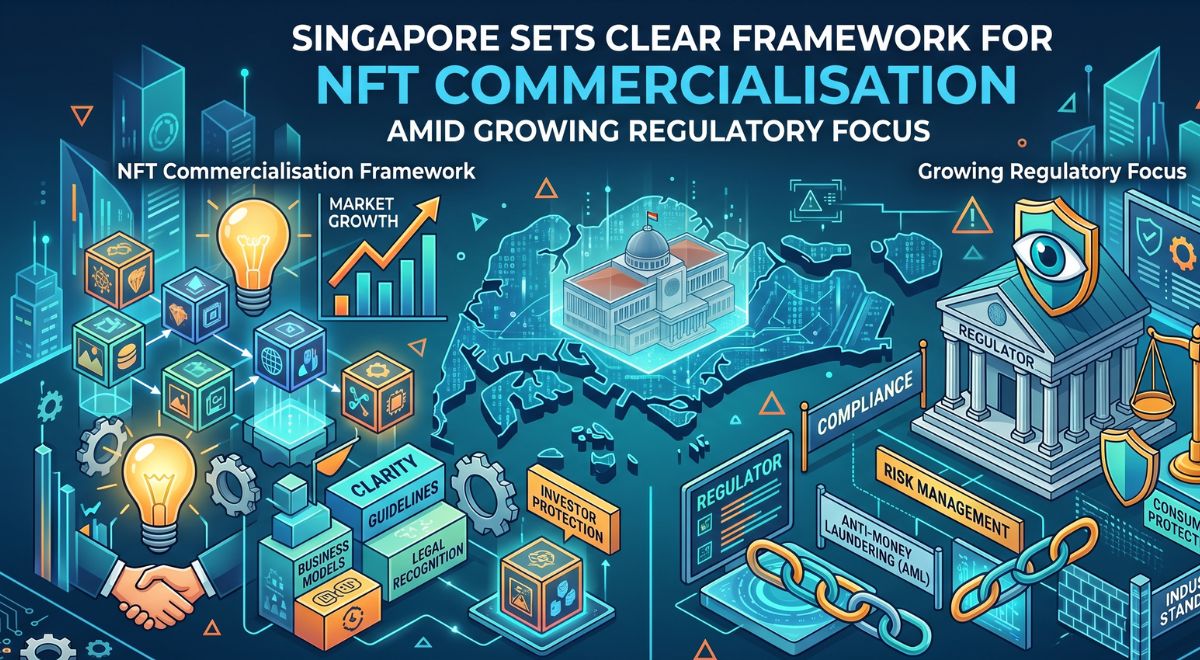
Singapore – As the non-fungible token (NFT) market continues to evolve, businesses and creators looking to commercialise NFT projects in Singapore must navigate a complex landscape of intellectual property, regulatory compliance, taxation, and consumer protection requirements.
While Singapore has not introduced dedicated NFT legislation, existing laws including the Securities and Futures Act (SFA), Payment Services Act (PSA), copyright regulations, and consumer protection rules collectively govern NFT-related activities depending on the nature and functionality of the token.
Legal experts note that NFT commercialisation extends beyond simply minting digital assets. It encompasses the entire revenue-generating lifecycle, including primary sales, marketplace listings, secondary market royalties, intellectual property licensing, auctions, and NFTs linked to physical products or real-world utilities.
Regulatory Classification Remains Key
A critical first step for NFT issuers is determining whether a token falls within Singapore’s regulated financial framework. According to guidance from the Monetary Authority of Singapore (MAS), NFTs representing digital art or collectibles are generally not regulated. However, NFTs that function as investment products, represent fractional ownership interests, or operate as payment instruments may be classified as capital markets products or digital payment tokens, potentially triggering licensing requirements.
Authorities have also emphasised that NFT ownership does not automatically transfer intellectual property rights. Buyers only receive the rights expressly granted through accompanying licence agreements or assignments.
Intellectual Property and Compliance Checks Essential
Industry practitioners identify intellectual property clearance as one of the most important pre-launch requirements. NFT creators must establish ownership or licensing rights for all underlying content, including artwork, music, videos, software code, and branding elements.
Projects are also encouraged to conduct trademark searches, secure creator agreements, and obtain model releases where individuals are featured within NFT content.
Consumer protection considerations have become increasingly important as regulators scrutinise marketing practices. Businesses must avoid misleading claims regarding scarcity, future value, ownership rights, or potential returns associated with NFT purchases.
AML and Payment Obligations Increasingly Relevant
Projects accepting fiat currency or facilitating token transactions may also face anti-money laundering (AML) and know-your-customer (KYC) obligations. Depending on the payment model, NFT operators may need to work with licensed payment providers and implement customer verification procedures in line with PSA requirements.
Compliance specialists recommend establishing AML policies before launch, particularly for projects handling customer funds directly.
Five-Step Commercialisation Process
The typical NFT commercialisation process in Singapore follows five core stages:
- Intellectual property and legal due diligence
- Selection of business model, blockchain, and marketplace
- AML, KYC, and payment infrastructure setup
- Preparation of legal agreements and smart contract audits
- Minting, launch, and ongoing post-sale administration
Depending on project complexity, the full process generally takes between eight and twenty weeks from concept development to public launch.
Documentation Plays Critical Role
NFT projects are advised to maintain comprehensive records, including copyright assignments, trademark search reports, marketplace agreements, smart contract audit reports, AML documentation, buyer licence agreements, and royalty distribution records.
Legal advisers warn that insufficient documentation frequently becomes a major obstacle during disputes over ownership, royalties, or regulatory investigations.
Costs Vary Widely by Project Scope
Commercialisation costs can differ significantly depending on collection size and technical requirements.
Estimated expenses include:
- Smart contract audits: SGD 3,000–20,000
- Legal and IP due diligence: SGD 1,000–8,000
- Marketplace commissions: Up to 15%
- Payment processing fees: 1.5%–5%
- AML/KYC implementation costs: SGD 500–5,000
Additional expenses may arise from blockchain transaction fees, tax compliance obligations, and ongoing royalty administration.
Higher Compliance Expectations in 2026
Although Singapore has yet to introduce NFT-specific legislation, compliance expectations have increased steadily through regulatory guidance and enforcement activity.
Legal observers suggest that regulators are paying closer attention to NFT projects that resemble financial products, as well as those making aggressive marketing claims regarding investment returns.
For NFT issuers planning launches in 2026, experts recommend conducting updated regulatory assessments, re-running intellectual property searches, reviewing GST obligations, and monitoring new guidance from MAS and tax authorities before going to market.
Common Risks for NFT Projects
Among the most common mistakes identified by legal professionals are launching without proper intellectual property rights, relying solely on marketplace terms and conditions, neglecting AML requirements, and assuming creator royalties will be automatically enforced across all platforms.
As Singapore’s digital asset ecosystem matures, industry participants are increasingly being encouraged to adopt robust governance, transparency, and compliance measures to ensure long-term sustainability and regulatory alignment.