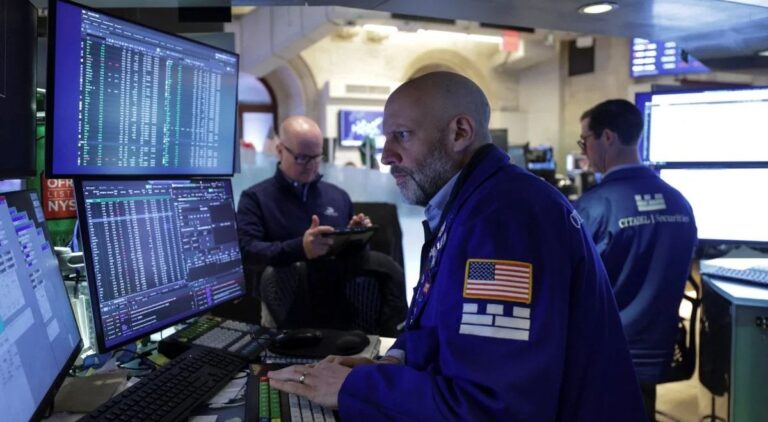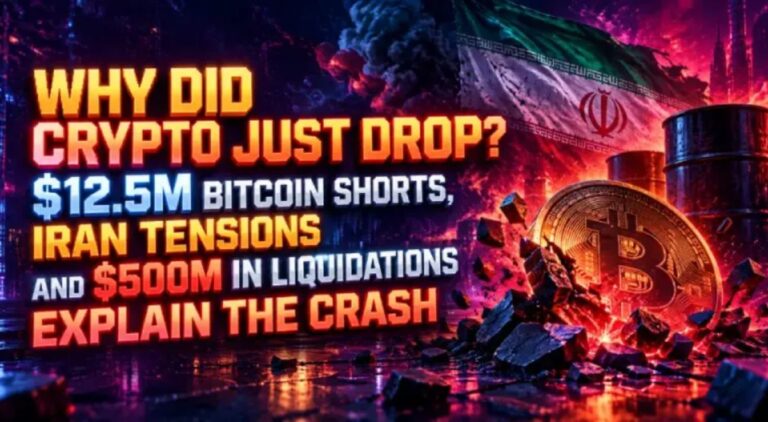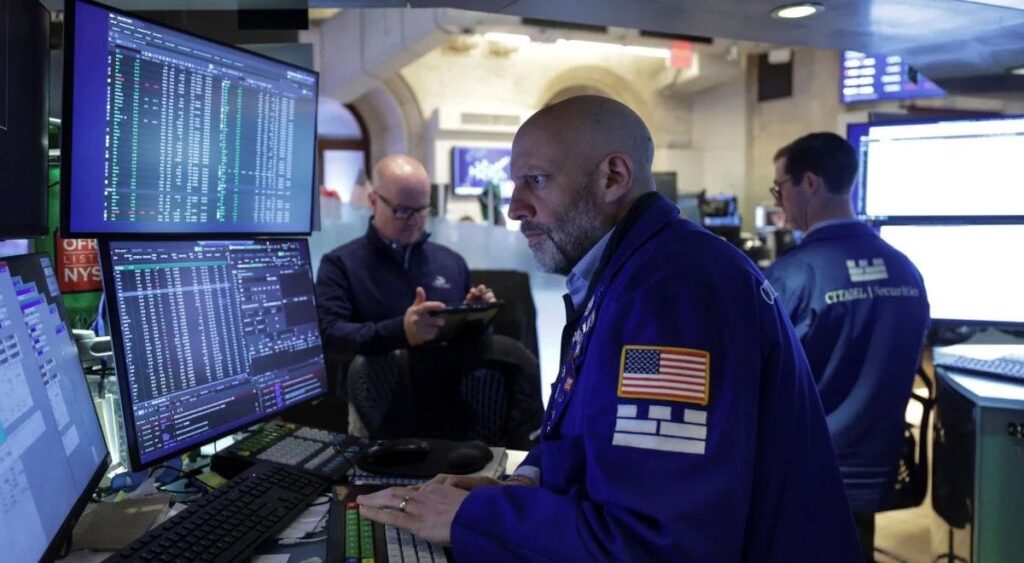

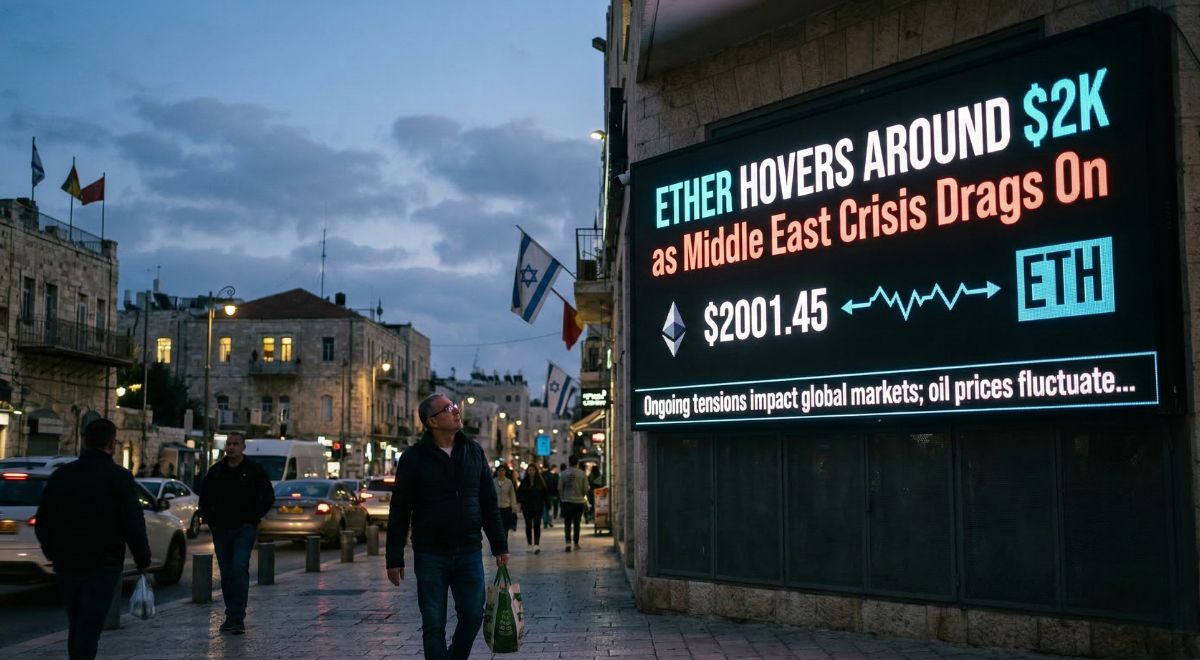
The cryptocurrency market continues to face uncertainty as Ethereum (Ether) struggles to maintain momentum around the $2,000 level. Ongoing geopolitical tensions in the Middle East have added fresh volatility to global financial markets, affecting both traditional assets and digital currencies.
Market Uncertainty Pressures Crypto
In recent weeks, the prolonged crisis in the Middle East has heightened concerns among investors worldwide. Rising geopolitical risks often push investors toward safer assets such as gold and government bonds. As a result, riskier investments—including cryptocurrencies—have experienced increased price fluctuations.
Ether, the second-largest cryptocurrency by market capitalization after Bitcoin, has been hovering close to the $2,000 mark. While the digital asset has shown resilience compared to previous downturns, the broader uncertainty in global markets has limited its ability to break above key resistance levels.
Global Markets React to Geopolitical Tensions
Financial markets around the world have been closely monitoring developments in the Middle East. Any escalation in the region can affect oil prices, global trade routes, and investor confidence. When such uncertainties arise, investors often shift capital away from high-volatility assets, including crypto.
Cryptocurrencies like Ethereum are still considered relatively speculative compared to traditional assets. This perception means geopolitical instability can lead to short-term sell-offs as traders attempt to reduce exposure to market risk.
Ethereum’s Long-Term Fundamentals
Despite short-term volatility, Ethereum’s underlying technology continues to attract developers, investors, and institutions. The blockchain remains the largest ecosystem for decentralized applications, decentralized finance (DeFi), and non-fungible tokens (NFTs).
Many analysts believe that Ethereum’s long-term outlook remains strong due to its continuous upgrades, improved scalability, and growing adoption across industries. Institutional interest in digital assets has also increased, providing potential support for prices during periods of uncertainty.
What Investors Are Watching
Market participants are now focusing on several key factors that could determine Ether’s next move:
- Geopolitical developments in the Middle East
- Global economic conditions and inflation trends
- Institutional investment flows into crypto markets
- Network developments within the Ethereum ecosystem
If geopolitical tensions ease, risk assets—including cryptocurrencies—could regain upward momentum. However, if the crisis intensifies, continued volatility may keep Ether trading near or below the $2,000 level in the short term.
Outlook for the Crypto Market
For now, Ethereum remains in a holding pattern, reflecting the cautious sentiment across global markets. While the current geopolitical environment is creating uncertainty, many investors view periods of consolidation as part of the broader growth cycle for digital assets.
As the Middle East crisis unfolds, traders and analysts alike will be watching closely to see whether Ether can hold the $2,000 support level—or whether further market turbulence lies ahead.