
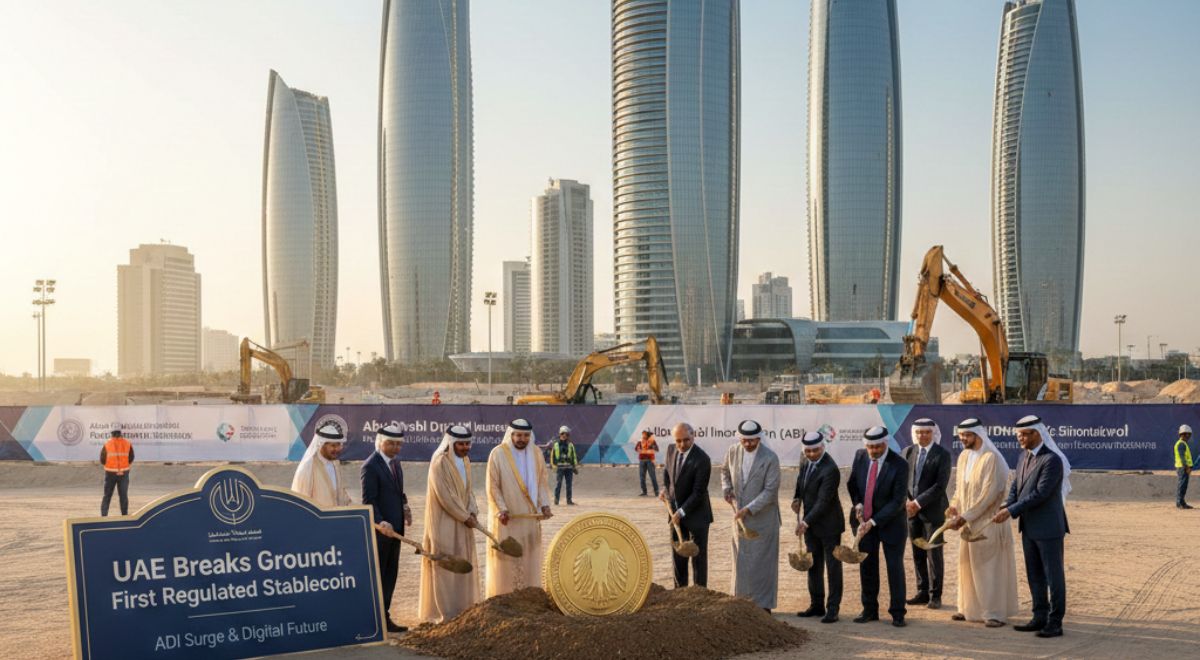
The United Arab Emirates (UAE) has taken a bold stride in the evolution of digital finance by launching its first fully regulated stablecoin — DDSC — backed 1:1 by the UAE dirham. Approved and licensed by the Central Bank of the UAE (CBUAE), this milestone marks a major shift as the country blends traditional financial stability with cutting-edge blockchain utility.
A New Era for Digital Assets
Dubbed DDSC, the dirham-pegged stablecoin was developed through a strategic partnership between the International Holding Company (IHC), First Abu Dhabi Bank (FAB), and Sirius International Holding — with backing and operational support from Sirius’s technology arm. After receiving central bank approval earlier this month, DDSC has now moved from planning to live operational status on the ADI Chain blockchain.
This development is notable not just because DDSC is pegged to the national currency, but because it is being issued under a regulatory structure designed to integrate blockchain-based digital money with mainstream payment and settlement systems. Under the UAE’s regulatory framework, issuers must maintain strict reserve standards, compliance safeguards, and operational transparency — all of which DDSC has met as part of its licensing process.
The Role of ADI Chain & ADI Token
Rather than launching on an open public blockchain, DDSC operates on ADI Chain, a sovereign-grade Layer-2 network developed by the ADI Foundation. This network is purpose-built to support high-volume, institutional digital finance applications while ensuring compliance and scalability. The ADI token — native to the ADI Chain — serves as the fuel for transaction processing and smart contract execution, meaning the success of DDSC will likely drive ADI usage and demand within the ecosystem.
By tying the stablecoin to ADI Chain, the UAE is creating a regulated blockchain ecosystem where digital assets and real-world finance converge, setting up programmable stablecoin flows alongside traditional banking systems.
Why This Matters
Stablecoins — digital tokens whose value is pegged to a fiat currency — have long existed on global markets, with dollar-backed tokens like USDC and USDT dominating crypto trading. But most of these have operated with varying degrees of oversight. The launch of DDSC as a regulated, central bank-approved stablecoin moves stablecoins closer to being useful infrastructure for mainstream finance, rather than just speculative assets.
Several key implications emerge from this launch:
- Institutional Use Cases: DDSC is designed for high-value enterprise applications such as cross-border settlement, treasury operations, trade finance, and programmable payments that can evolve with automated contracts.
- Trade and Remittances: With the UAE handling over $1.4 trillion in foreign trade annually, even a small migration of flows onto the blockchain could significantly increase efficiency and reduce costs in global remittance and settlement corridors.
- Global Integration Potential: Partnerships and potential collaborations with global payment networks like Mastercard and mobile-money platforms including M-Pesa are being explored, offering the possibility that this stablecoin could extend beyond domestic payment rails to serve emerging markets.
Leadership in Digital Finance
The regulated launch of DDSC signals the UAE’s ambition to be at the forefront of digital asset regulation and adoption. By combining a sovereign-backed currency peg with a blockchain architecture built for compliance and transparency, the UAE is reinforcing its position as a global innovation hub where digital finance can evolve within a regulated framework.
More than just a technical milestone, this stablecoin launch represents a strategic financial pivot — one that blends the credibility of traditional banking institutions with the promise of blockchain efficiency and automation. As stablecoin adoption continues to expand worldwide, the DDSC model may serve as a blueprint for how regulated digital currencies can underpin future financial infrastructures.