
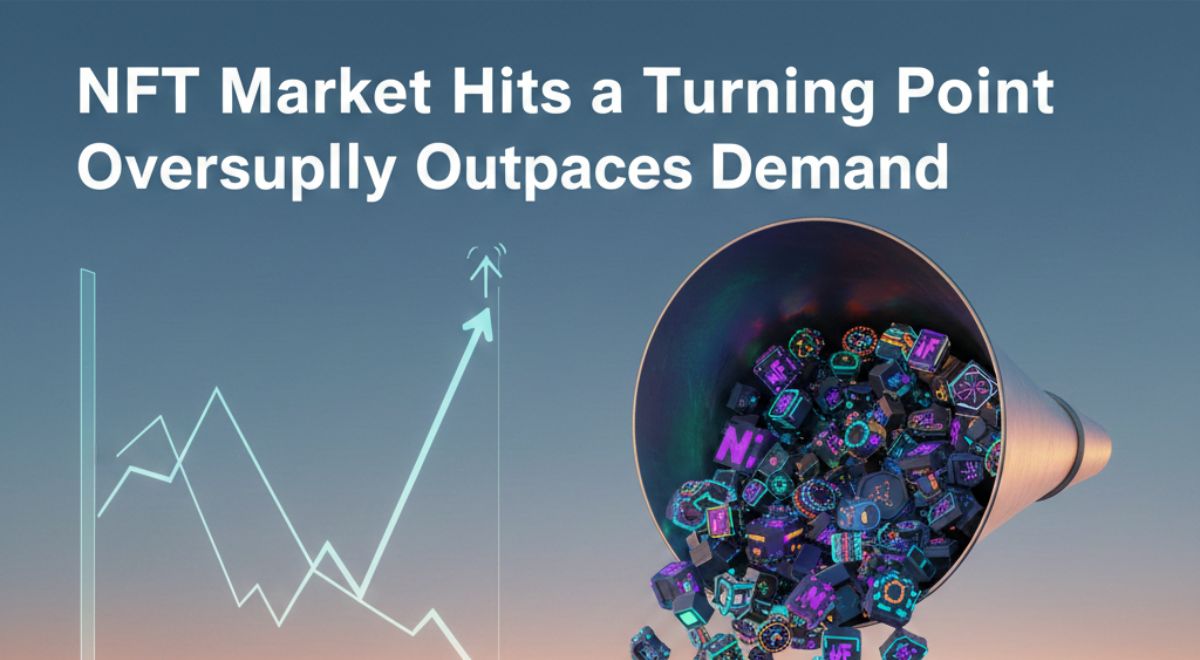
The global NFT market is facing one of its sharpest slowdowns yet, as new data shows a widening gap between the number of tokens minted and actual buyer interest. Analysts are calling it a historic oversupply crisis that could reshape how projects are built and valued in the space.
According to industry tracker CryptoSlam, the total number of non-fungible tokens in circulation reached 1.34 billion by the end of 2025, a 25 per cent increase from the previous year. That growth is staggering compared with 2021, when just 38 million NFTs were active on the market.
But while supply has skyrocketed, demand has quietly weakened. Total annual NFT sales dropped 37 per cent in 2025, from roughly $8.9 billion in 2024 to $5.63 billion last year. Average prices also slid, with the typical NFT selling for about $96 in 2025, compared to $124 in 2024 and more than $400 at the market’s peak in 2021-22.
NFT market cap tells the same story. It shrank from $9.2 billion in January 2025 to just $2.4 billion by December, marking the lowest recorded value since broader adoption began.
Why It Matters
The imbalance goes beyond numbers. Creators and platforms have been releasing new tokens at a rapid pace, but buyers aren’t keeping up. Experts point to several factors behind the demand slump:
Market fatigue from years of hype and speculative buying.
Volatility in crypto markets, including swings in Bitcoin and ether.
Shifting buyer priorities toward utility and long-term value.
This suggests the era of pure speculation in NFTs may be fading. Instead, collectors are focusing on projects with real benefits, such as digital goods tied to gaming experiences, exclusive access, or membership perks.
Gaming NFTs Stand Out
Amid the downturn, gaming-linked NFT transactions held up better than average. Roughly 38 per cent of NFT trading volume in 2025 came from gaming assets. Those with clear utility, from enhanced in-game items to exclusive access or integrated digital-economy features, continued to draw interest from buyers.
For the Middle East and global markets alike, this may signal a turning point. Projects that deliver value beyond collectability could be better positioned to thrive, while speculative collections without strong community support may struggle.