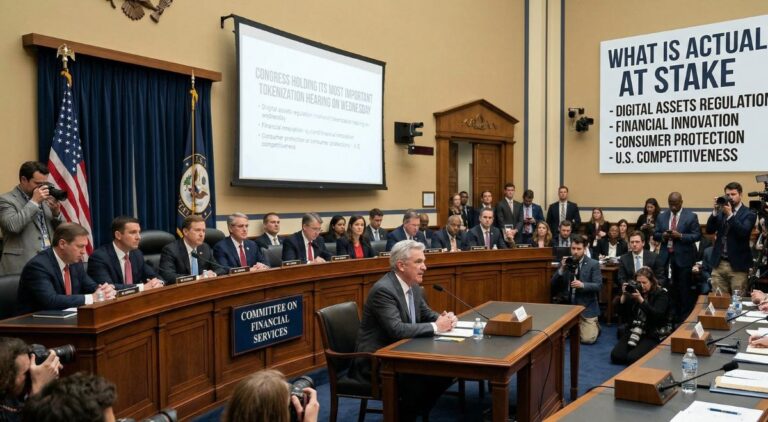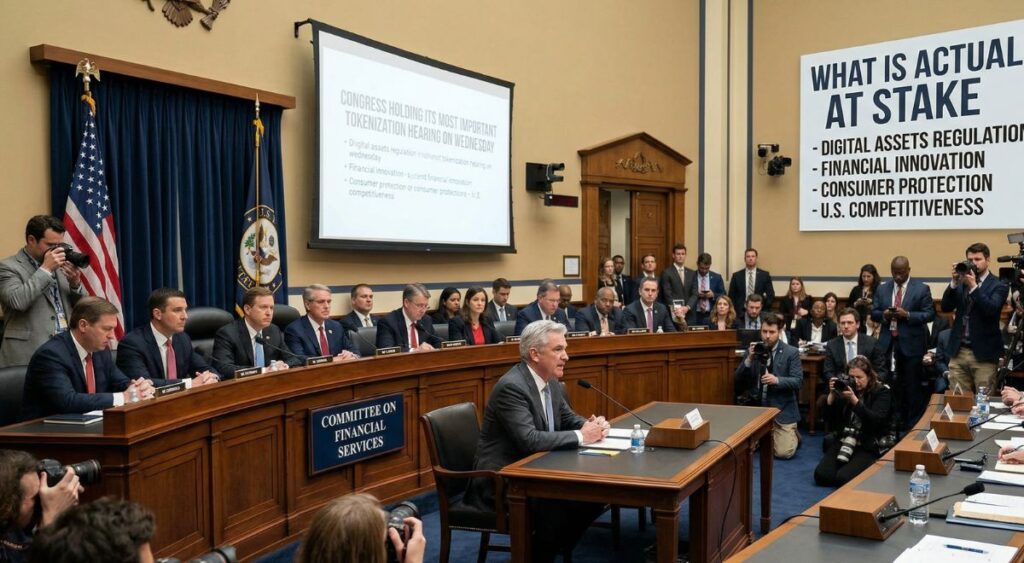

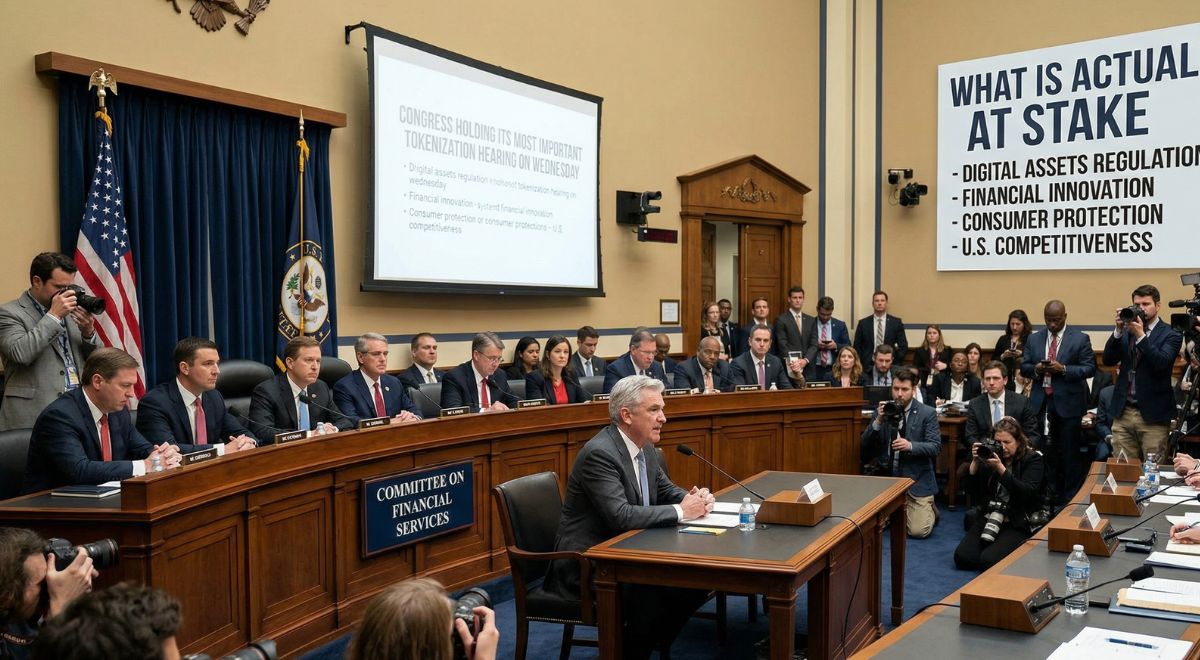
The U.S. Congress is preparing for a landmark hearing that could shape the future of global finance. Scheduled by the House Financial Services Committee, the session focuses on “Tokenization and the Future of Securities”—a topic that sits at the intersection of blockchain technology and traditional capital markets.
This is not just another crypto discussion. It is a pivotal moment that could determine how stocks, bonds, and real-world assets are traded in the digital age.
What Is Tokenization?
Tokenization refers to converting real-world assets—such as stocks, bonds, or real estate—into digital tokens on a blockchain. These tokens can be traded instantly, globally, and often at lower cost compared to traditional systems.
Importantly, tokenization does not change the nature of the asset itself. A tokenized stock is still a stock—it just exists in a more efficient, digital format.
Why This Hearing Matters Now
The timing of this hearing is critical. Several major developments have converged:
- The tokenized real-world asset (RWA) market has already surpassed $12 billion
- Regulators are rapidly redefining crypto classifications
- New legislation like the CLARITY Act is nearing approval
- Exchanges are beginning to integrate tokenized securities into existing systems
Together, these changes signal that the financial system is entering a new phase of digital transformation.
The Core Issue: Updating Financial Infrastructure
At its heart, the hearing is about one key question:
Can the current financial system handle blockchain-based assets?
Today’s markets were built decades ago, with settlement times that can take days and systems that are fragmented across institutions. Tokenization promises:
- Near-instant settlement
- 24/7 global trading
- Reduced intermediaries
- Greater transparency
Lawmakers must decide whether to adapt existing laws or create entirely new frameworks to support this shift.
Regulatory Clarity vs Innovation
One of the biggest challenges is balancing innovation with regulation.
Agencies like the U.S. Securities and Exchange Commission and the Commodity Futures Trading Commission are already working to define how digital assets should be classified.
However, key questions remain:
- Should tokenized assets be regulated like traditional securities?
- Who oversees cross-border blockchain markets?
- How can investor protection be ensured?
The outcome of this hearing could directly influence upcoming legislation and regulatory policy.
Wall Street Meets Blockchain
Another major issue at stake is the integration of traditional finance with blockchain technology.
Major institutions—including exchanges and clearinghouses—are actively exploring tokenization. The hearing will include voices from both Wall Street and the crypto industry, highlighting how these two worlds are beginning to merge.
If successful, tokenization could unlock trillions of dollars in assets by making them more accessible and liquid.
The Global Competition Factor
The United States is not alone in this race. Other regions are already advancing digital asset frameworks and blockchain-based financial systems.
If the U.S. fails to act quickly, it risks falling behind in what many see as the next evolution of global finance. This adds urgency to the decisions being made in Congress.
Risks and Concerns
Despite the potential benefits, tokenization comes with risks:
- Regulatory gaps could expose investors
- New forms of fraud or market manipulation may emerge
- Technical and cybersecurity challenges remain
- Traditional financial institutions may face disruption
Lawmakers must address these risks without slowing down innovation.