

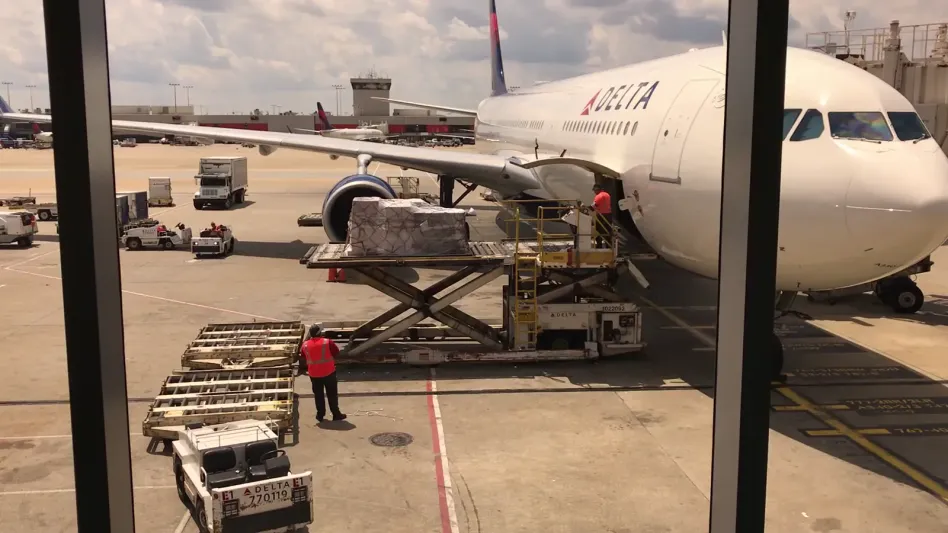
Photo Credit : WAM
Global air cargo rates continued their upward trajectory for a seventh consecutive week, with the average worldwide price increasing 2% week on week to $3.49 per kilogram during week 46, covering November 9 to 15, according to WorldACD Market Data.
The latest figures, reported by TradeArabia News Service, show a significant increase from the $3.04 average recorded in mid-September. The rise came despite a 2% reduction in global air cargo capacity and a 4% decline in chargeable weight compared with the previous week.
The drop in volumes was partly linked to the Diwali festival, which slowed export activity across South Asia. Disruptions to US aviation operations on November 13 also affected international cargo flows.
Regional Air Cargo Rate Trends
Air cargo pricing movements varied across regions during the reporting period. Rates from the Middle East and South Asia declined 1% week on week, while North American rates fell 2%.
Elsewhere, prices continued to increase. Central and South America recorded the strongest growth, with rates rising 6%, followed by Africa at 4%. Asia Pacific and Europe both registered increases of 2%.
Compared with the previous two-week period, global air cargo rates were 4% higher, with every region recording growth. Central and South America again led the increase at 6%, while Asia Pacific and Europe each advanced 4%.
On an annual basis, global air cargo rates were 32% higher than during the corresponding week in 2025. The Middle East and South Asia recorded the largest increase at 62%, while Central and South America posted the smallest rise at 13%.
Global Capacity and Cargo Volumes Under Pressure
Worldwide air cargo capacity contracted 2% during week 46, with declining bellyhold capacity emerging as the primary contributor. Freighter capacity also recorded a slight reduction.
North America experienced the sharpest capacity decline at 8%. Capacity from the Middle East and South Asia fell 1%, while Europe and Africa recorded reductions of 2% and 3%, respectively. Asia Pacific capacity remained unchanged.
Central and South America was the only region to record capacity growth, expanding 3%. This reflected adjustments in bellyhold capacity, with airlines shifting available space towards routes connecting North America with Central and South America.
Chargeable weight also declined across most major origin regions. The Middle East and South Asia recorded the steepest weekly fall at 21%, followed by Europe at 6%, North America at 4%, Africa at 2% and Asia Pacific at 1%. Central and South America bucked the trend, posting a 6% increase.
Over a two-week period, worldwide cargo tonnage declined 2%. North American volumes remained stable, while Central and South America and Asia Pacific each recorded a 1% decline. The Middle East and South Asia experienced the largest reduction at 5%.
The US aviation disruption on November 13 further affected cargo movements. The outage halted commercial flights across the United States and prompted aviation authorities in Canada, Mexico and the European Union to suspend US-bound flights during the disruption. International flight capacity departing the US remained approximately 10% below the previous week’s level over the following weekend.
Compared with week 46 of 2025, global chargeable weight was down 1%. Africa, Asia Pacific and North America recorded modest annual increases, while Europe declined 2%, Central and South America fell 7%, and the Middle East and South Asia experienced a 15% reduction.
Asia Pacific Cargo Routes Show Mixed Performance
Air cargo volumes from Asia Pacific to the United States recorded a partial recovery, increasing 1% week on week after declining 3% in the previous reporting period.
Shipments increased from China, Hong Kong and Japan, while volumes from Thailand and Vietnam remained stable. Singapore recorded a 10% decline, followed by Taiwan at 6%, Malaysia at 5% and South Korea at 1%. Indonesia delivered the strongest weekly growth, with volumes increasing 10%.
On an annual basis, Asia Pacific cargo shipments to the United States were 14% higher. Taiwan led the growth at 32%, while South Korea and Vietnam recorded increases exceeding 20%. China, Japan, Thailand and Indonesia also posted growth above 10%. Singapore and Malaysia were the only major origins to report annual declines, falling 14% and 2%, respectively.
Meanwhile, shipments from Asia Pacific to Europe declined 1% week on week, ending two consecutive weeks of stable volumes. Reductions from Malaysia, Hong Kong, Thailand, Vietnam and Japan contributed to the decline.
South Korea, Indonesia and Taiwan recorded volume increases ranging between 3% and 5%, while shipments from China and Singapore remained unchanged.
Annual cargo volumes on the Asia-Europe trade lane were down 15%, marking the seventh consecutive week of double-digit declines. Hong Kong recorded the largest reduction at 34%, alongside declines from Thailand, Taiwan, China and Japan. Growth from Malaysia, Singapore, South Korea and Vietnam provided some support.
Air cargo pricing from Asia Pacific increased 2% to the United States and 4% to Europe during the week. On transpacific routes, most origins recorded higher rates, although prices declined from Indonesia, South Korea and Taiwan.
Annual pricing to the United States remained more than 40% higher. Singapore recorded the strongest increase at 86%, followed by Japan at 75% and Malaysia at 57%, representing the largest annual increases in US-bound rates from these markets this year.
Rates from Asia Pacific to Europe showed mixed movements. Prices declined by low single-digit percentages from Malaysia and Singapore, while Thailand remained unchanged. Other origins recorded increases, led by China at 6%, followed by Hong Kong and Vietnam at 4% each.
Compared with the same period last year, pricing on the Asia-Europe route was 26% higher. Rates from Indonesia, South Korea, Malaysia and Thailand increased by nearly 50%, while China and Hong Kong recorded gains of 16% and 18%, respectively.
Middle East and South Asia Face Sharp Cargo Declines
Air cargo volumes from the Middle East and South Asia experienced significant weekly reductions, particularly on routes to Europe and the United States.
Chargeable weight to Europe fell 25%, while shipments to the United States declined 23%. The reductions were attributed partly to lower South Asian export activity during the Diwali festival and ongoing volatility in the Middle East.
On routes to Europe, shipments from India dropped 27%, while Sri Lanka and Bangladesh recorded declines of 29% and 17%, respectively. Cargo volumes from Dubai fell 3%.
Annual comparisons showed that shipments from the Middle East and South Asia to Europe were down 29%. Declines ranged from 13% for Bangladesh to 67% for Dubai.
US-bound cargo movements presented a mixed picture. Shipments from Bangladesh and Sri Lanka recorded modest weekly increases, while volumes from India declined 22% and Dubai experienced a 40% reduction.
Despite the weekly downturn, cargo volumes from the Middle East and South Asia to the United States were 6% higher year on year. India recorded 23% growth, while Bangladesh posted a 38% increase.
Pricing trends across the region also varied by destination. Average rates to the United States remained unchanged week on week, as a 1% decline from India was offset by increases from Dubai, Bangladesh and Sri Lanka. Rates from Sri Lanka recorded a particularly strong 11% increase.
Average prices from the Middle East and South Asia to Europe fell 1%, with most origin markets showing relatively stable rates.
However, annual comparisons highlighted substantial increases. Rates to Europe were 68% higher than a year earlier, with India and Dubai recording increases of 76% and 97%, respectively. US-bound pricing from the region climbed 81% year on year, supported by increases of 88% from both India and Dubai.
Air Cargo Market Outlook
Air cargo rates are expected to maintain their upward momentum as the industry approaches the peak shipping season, although the scale of future increases could remain relatively moderate.
The National Retail Federation has revised its forecast for the US holiday shopping season, projecting a 4.2% increase in sales volume. The organisation noted that consumers are increasingly beginning their Christmas shopping earlier and anticipates strong retail activity during the upcoming Thanksgiving weekend.
The expected increase in consumer spending could support demand for air freight as retailers and businesses prepare for the busiest shipping period of the year.
Airlines have also demonstrated the ability to adjust capacity quickly in response to changing market conditions, particularly across transpacific routes. This flexibility, combined with seasonal demand growth, is expected to support further price increases while limiting the pace of rate escalation.