
The non-fungible token (NFT) market has entered a new stage of development in mid-2026, moving beyond the speculative frenzy that defined the 2021–2022 boom. Following years of market corrections and predictions of the sector’s decline, NFTs are showing signs of recovery, with growth increasingly driven by practical use cases rather than digital collectibles.
Industry estimates place the global NFT market between $40 billion and $65 billion in 2026, with some forecasts valuing the sector at approximately $60.8 billion. The market has expanded steadily from an estimated $43 billion in 2025, while long-term projections remain optimistic, with some analysts expecting the industry to surpass $1 trillion by 2040.
Trading activity presents a mixed picture. NFT sales generated roughly $2.8 billion during the first half of recent reporting periods, with gaming-related NFTs accounting for nearly 38% of all transaction volume. Ethereum continues to dominate the ecosystem, although its monthly NFT trading volumes, averaging around $720 million in early 2026, remain well below the record levels seen during the market’s peak.
The market experienced renewed momentum in early 2026, with total NFT market capitalization increasing by more than $220 million in a single week. Leading collections such as Mutant Ape Yacht Club, Bored Ape Yacht Club, and Pudgy Penguins recorded notable price gains, reflecting renewed investor interest. Despite the rebound, the overall market remains significantly below its all-time highs, suggesting a more selective and sustainable recovery rather than a return to speculative buying.
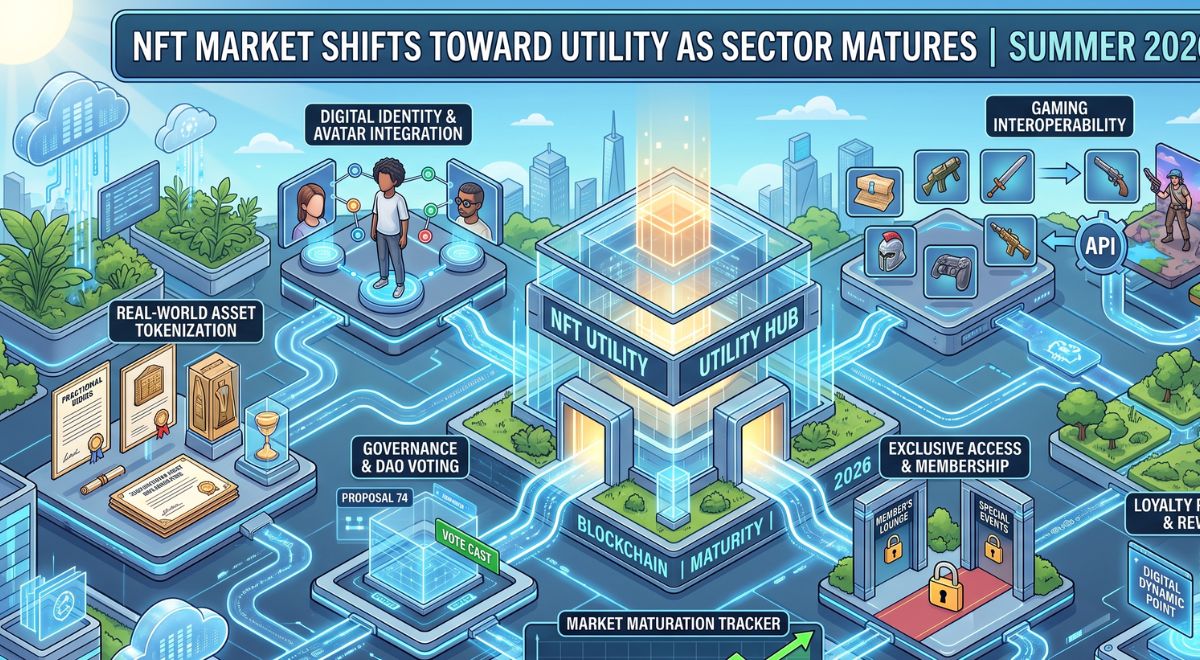
A key theme shaping the NFT industry this summer is the growing focus on utility. NFTs are increasingly being used as digital infrastructure for memberships, event tickets, loyalty programs, certifications, intellectual property management, and tokenized real-world assets. Gaming and metaverse-related assets continue to generate the highest transaction volumes, while real estate and real-world asset (RWA) NFTs are also gaining traction.
Major NFT marketplaces, including OpenSea, Blur, Magic Eden, and Tensor, continue to lead the sector as multi-chain integration and Layer 2 blockchain solutions improve scalability, reduce transaction costs, and broaden user access. Adoption remains strongest in India, while the Asia-Pacific region benefits from expanding blockchain gaming activity, and North America continues to hold a significant share of the global market.
Despite improving sentiment, challenges remain. Many low-quality NFT projects have disappeared, market liquidity varies across collections, and regulatory uncertainty continues to affect investor confidence. While the era of rapid speculative gains has largely faded, the sector’s shift toward real-world utility suggests a more mature and sustainable future for digital ownership.