

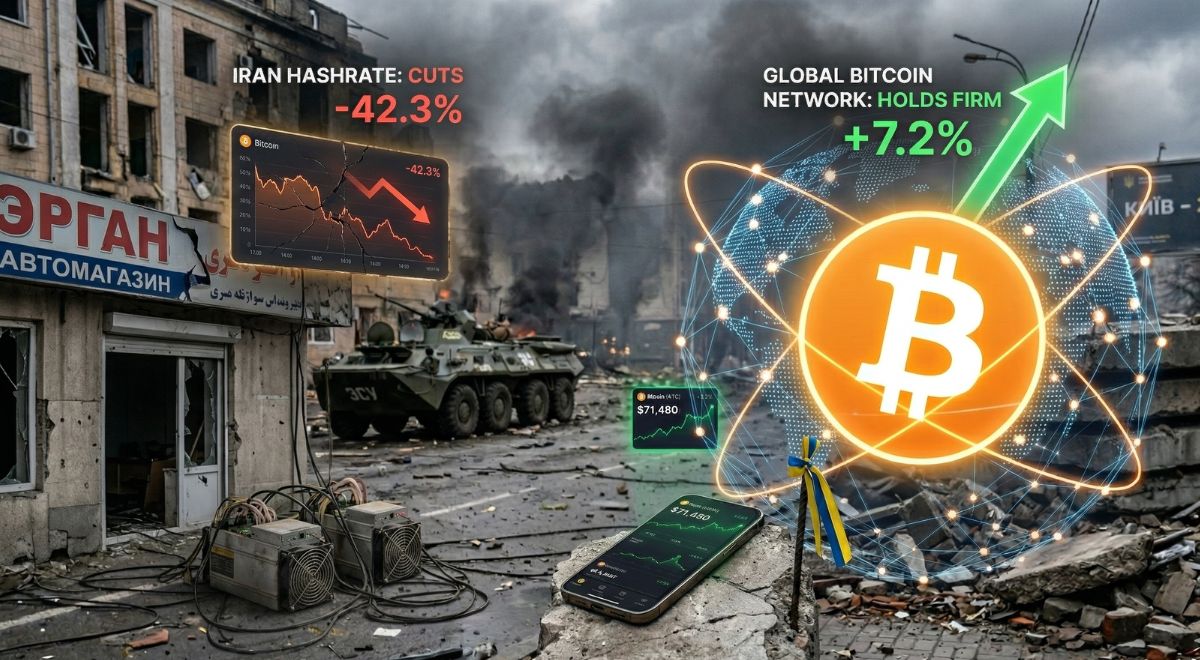
The ongoing Iran war is beginning to leave a clear mark on the cryptocurrency mining sector—especially within Iran itself. However, despite sharp regional disruption, the global Bitcoin network continues to operate with remarkable stability, highlighting the resilience of decentralized systems.
Iran’s Mining Sector Hit Hard
Recent data shows that Iran’s Bitcoin hashrate—the total computing power used for mining—has dropped dramatically amid the conflict.
- Iran’s hashrate fell حوالي 77%, from roughly 9 EH/s to just 2 EH/s
- Around 7 exahashes of capacity were lost خلال چند months
- Military tensions and infrastructure disruptions forced many mining operations offline
Bitcoin mining depends heavily on stable electricity and operational security, both of which are directly impacted during war. Power outages, fuel shortages, and internet disruptions have made it difficult for miners inside Iran to continue operating.
Why the Drop Happened
Several key factors contributed to the decline:
1. Energy Instability
Mining requires massive energy. جنگ کی وجہ سے power supply disrupt hui, making operations unreliable.
2. Infrastructure Damage
Conflict conditions affect internet connectivity, cooling systems, and physical mining facilities.
3. Profitability ضغط
Bitcoin prices have dropped significantly from earlier highs, making mining less profitable—especially for older machines
Global Bitcoin Network Remains Strong
Despite the sharp سقوط in Iran, the global Bitcoin network has not collapsed—and this is the most important takeaway.
- Global hashrate remains around ~1,000 EH/s
- Iran’s share was less than 1% of total network power
- Mining activity shifted to other regions instead of disappearing
Experts note that:
“Regional disruptions redistribute hashrate rather than destroy it.”
This means when one country drops out, others—like the US, Russia, or Gulf countries—automatically pick up the load.
Decentralization in Action
Bitcoin’s نظام is designed exactly for situations like this. Its decentralized structure ensures:
- No single country can shut down the network
- Mining power is globally distributed
- The system adapts automatically to disruptions
This is why even a 77% collapse in one region did not توقف the network.
Broader Trends: Not Just War
Interestingly, not all hashrate decline is بسبب جنگ. Some global factors are also at play:
- Bitcoin price decline → lower mining rewards
- High electricity costs → forcing inefficient miners offline
- Industry shift → some miners moving toward AI data centers
What This Means for Crypto
The situation highlights two important realities:
1. Local Vulnerability
Countries involved in conflict can lose mining capacity quickly.
2. Global Resilience
Bitcoin as a network remains stable—even under geopolitical stress.